 English
 العربية
 Deutsch
 Español
 Français
 Italiano
 Português
 Русский
 Türkçe
 Tiếng Việt

What Is Game Development ? How To Start Game Development
How a game is made
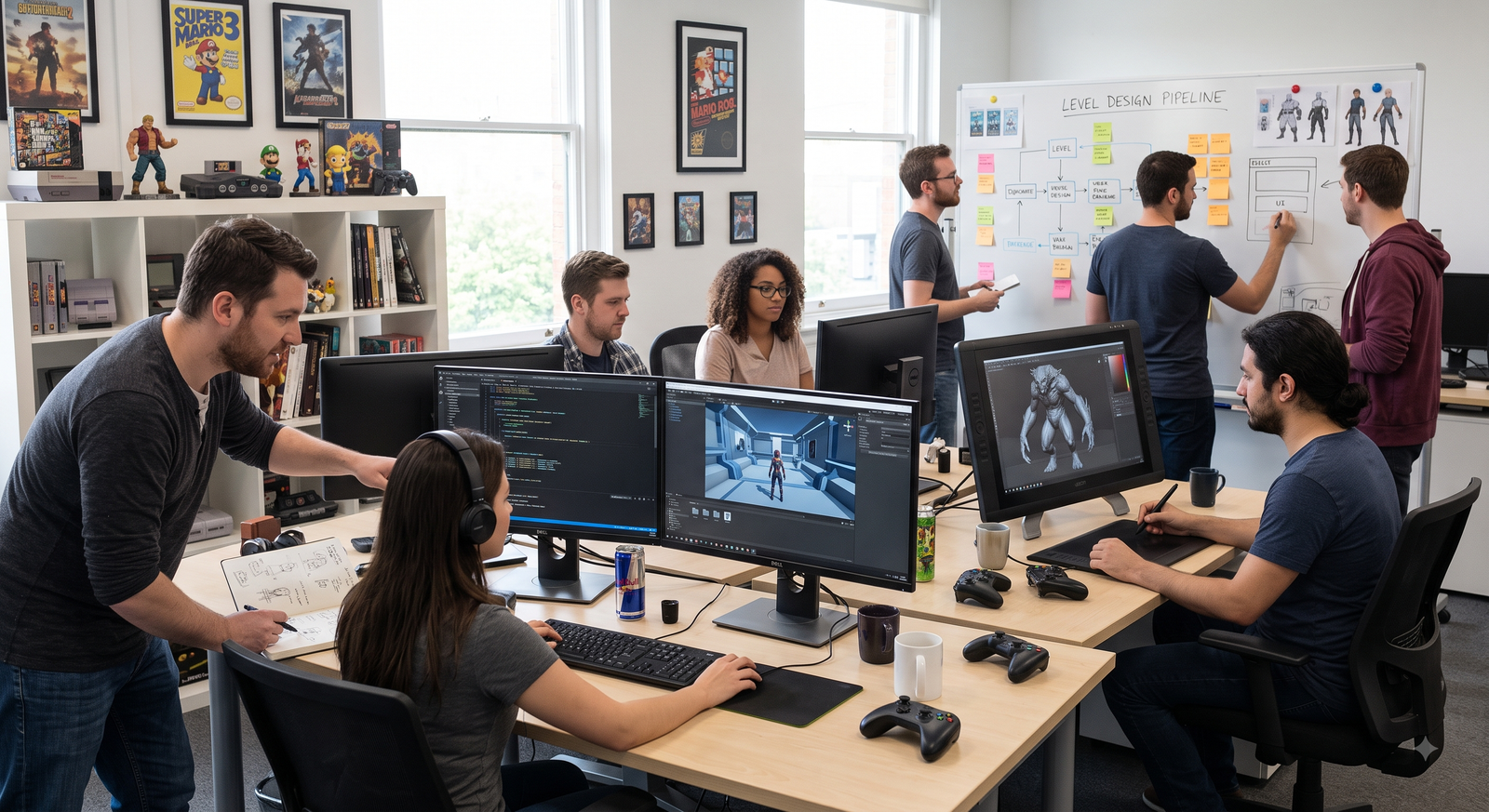
Game Development: The Art and Science of Creating Interactive Worlds Video games have evolved from simple pixel-based entertainment into massive digital experiences enjoyed by billions of peoples in world. From mobile puzzle games to large open-world adventures, games have become an important part of modern entertainment, education, and even professional competition. Every successful game has creative and technical professionals who work together to transform an idea into an interesting experience. This fascinating process is known as game development. Game development is the process of game designing, creating, testing, and maintaining games for computers, gaming consoles, mobiles, and virtual devices. It combines the creativity, storytelling, programming, art, animation, sound design, and project management to build experiences that attract the players. Although the process can be challenging, it is also one of the most rewarding fields in technology because it allows developers to create worlds that inspire imagination and bring ideas to life. Game Development involves much more than writing code. Every game begins with an idea that gradually grows into a complete project. Developers decide what type of game they want to create, who the target audience is, and what kind of experience they want players to have. Some games focus on storytelling, while others emphasize action, strategy, puzzles, or exploration. Once the concept is finalized, the development team starts building the game by combining technology with creative design. Every feature, from character movement to visual effects and background music, is carefully planned and developed to create an enjoyable experience. The Main Stages of Game Development Creating a video game usually follows several important stages. Concept and Planning Every successful game start with planning. During this stage, developers decide the game's genre, gameplay mechanics, story, art style, and technical requirements. They also estimate the development time, budget, and resources needed to complete the project. A design document is often created to describe every major aspect of the game. This document guides the development process and helps keep the team aligned.
Game Design: Game design focuses on how players connect with the game. Designers create the backgrounds, game rules, objectives, challenges, rewards, and progression systems that make the experience engaging. A well-designed game balances difficulty with enjoyment. Players has zero interest on easy games. If it is too difficult, players will be frustrated. Finding the balance is important for a game designer.
Programming: Programming brings the game to life. Developers write code that controls character movement, enemy behavior, player interactions, user interfaces, saving systems, networking, and artificial intelligence. Programming languages like C++, C#, and JavaScript are commonly used depending on the game engine and platform supports. Art and Animation Visual design has a role for making memorable games. Artists design characters, environments, weapons, vehicles, buildings, and countless other objects that appear in the game world. Animators then give life to these creations by designing movements such as walking, running, jumping, attacking, and facial expressions. Smooth animations make gameplay feel natural and increase player immersion. Audio Design Sound is often overlooked, yet it has a powerful impact on the gaming experience. Background music creates emotion, while sound effects make actions feel realistic and satisfying. Voice acting also adds to characters and helps players connect with the game's story. Together, music, dialogue, and sound effects create a richer and more immersive environment. Testing and Quality Assurance Before a game released, it has to taste the working condition. Testers search for bugs, crashes, graphical issues, and gameplay problems that might affect the player experience. Testing is a process of development. Every time new features are added, developers verify that existing systems continue working correctly. Careful testing helps ensure the final product is stable and enjoyable. Popular
Game Engines: Game engines simplify development by providing tools for graphics, physics, lighting, animation, and scripting.
Unreal Engine: is known for its realistic graphics, advanced rendering technology, and powerful development tools. It is widely used for high-quality PC and console games.

Unity: is a popular engine that supports 2D and 3D game development. It is famous for independent developers because of its flexibility and big community support.

Other engines such as Godot, Gamemaker, and CryEngine also offer excellent features depending on the type of project being developed. The Importance of Teamwork Although some independent developers create games alone, larger projects require collaboration among many professionals. A typical game development team may include game designers, programmers, artists, animators, sound engineers, writers, quality assurance testers, and project managers. Each member contributes specialized knowledge that helps transform an idea into a finished game. Good communication is essential because changes in one area often affect many other parts of the project. Successful teams regularly discuss progress, solve problems together, and adjust their plans when necessary.
Challenges in Game Development: Game development is exciting, but it also comes with significant challenges. Developers must balance creativity with technical limitations, meet deadlines, and optimize games for different devices. Performance optimization is particularly important. A visually impressive game must also run smoothly across a variety of hardware configurations. Developers spend considerable time improving loading speeds, reducing memory usage, and maintaining stable frame rates. Another challenge is keeping players engaged. Modern gamers expect fresh gameplay, smooth experience, and regular updates. Listening to community feedback after release has become an important part of long-term game development. Career Opportunities: The gaming industry continues to grow rapidly, creating opportunities for professionals with diverse skills. Some popular careers include: Game Programmer Gameplay Programmer Game Designer Level Designer Technical Artist 3D Artist Character Animator Sound Designer User Interface Designer Quality Assurance Tester Multiplayer Network Engineer Game Producer Independent developers also have opportunities to publish their own games through digital platforms, allowing small teams to reach global audiences.

Ark
CEO / Co-Founder
Popular Tools
Recent Posts