 English
 العربية
 Deutsch
 Español
 Français
 Italiano
 Português
 Русский
 Türkçe
 Tiếng Việt

Cybersecurity
Cybersecurity and its working
Cybersecurity: Why Protecting Our Digital World Matters More Than Ever
In today's connected world, technology has become a part of almost every aspect of our lives. We use smartphones to communicate, online banking to manage finances, cloud storage to save important files, and social media to stay connected with family and friends. Businesses rely on digital systems to serve customers, process payments, and store valuable information. While these advancements have made life easier, they have also created new risks. Every device connected to the internet has the potential to become a target for cybercriminals. This is why cybersecurity has become one of the most important fields in modern technology.
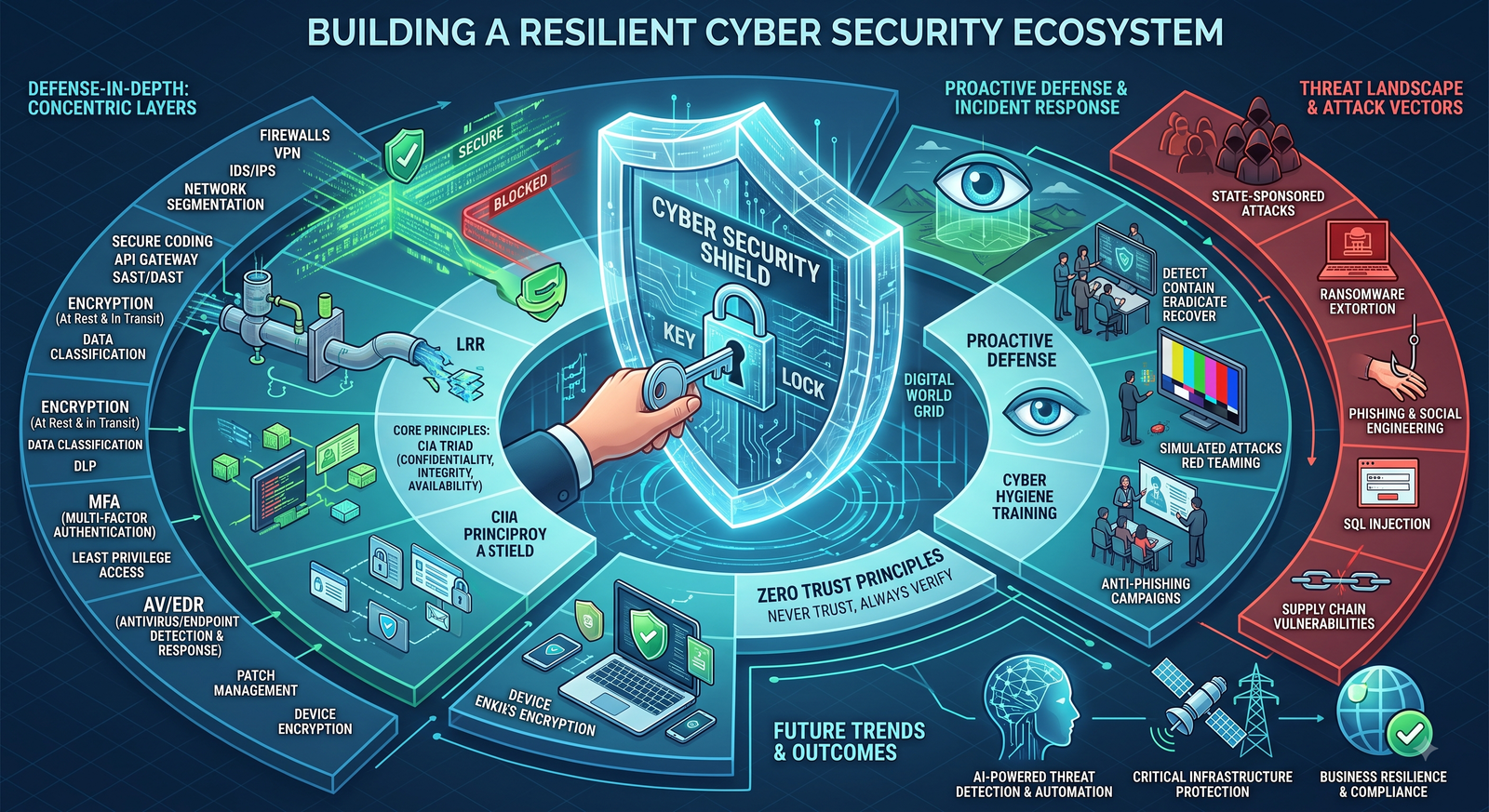
Cybersecurity is the practice of protecting computers, networks, software, and digital information from unauthorized access, theft, or damage. Its primary goal is to keep systems secure while ensuring that users can safely access the information they need. Whether it is an individual protecting personal photos or a multinational company safeguarding customer data, cybersecurity plays a critical role in maintaining trust in the digital world.
One reason cybersecurity has gained so much attention is the rapid growth of online services. Years ago, people mainly used computers for basic tasks. Today, we shop online, attend virtual meetings, stream entertainment, and store sensitive documents on cloud platforms. As our digital presence grows, so does the amount of valuable information available to criminals. Personal details, financial records, passwords, and business secrets are all attractive targets for attackers.
Cyber threats come in many different forms. One of the most common is malware, which refers to malicious software designed to damage systems or steal information. Malware viruses, worms, spyware, and ransomware. Some types of malwares silently collect user personal information, while others lock important files and demand payment to restore user access. These attacks can affect individuals, businesses, schools, hospitals, and even government organizations.
Another widespread threat is phishing. In a phishing attack, criminals send fake emails, messages, or websites that appear to come from trusted organizations. Their goal is to trick people into revealing passwords, banking information, or other confidential data. A single careless click on a fraud link can sometimes give attackers access to an entire user account. Because phishing relies on human mistakes rather than technical weaknesses, awareness and education are essential parts of cybersecurity.
Weak passwords remain another major security issue. Many people continue to use simple passwords or reuse the same password across multiple accounts. If one website experiences a data security breach, attackers often try those same login credentials on other services. Creating strong, unique passwords for every account significantly reduces this risk. Password managers can also help users generate and securely store complex passwords without needing to memorize them all.
Keeping software updated is another basic but powerful security practice. Software developers regularly release updates to fix security vulnerabilities that have been discovered after a product is released. Delaying these updates leaves devices exposed to known weaknesses that attackers may exploit. Installing updates promptly helps close these security gaps and improves overall system protection.
Businesses face even greater cybersecurity challenges because they manage large amounts of customer and financial information. A successful cyberattack can interrupt operations, damage a company's reputation, and result in significant financial losses. For this reason, organizations invest in firewalls, encryption, intrusion detection systems, backup solutions, and employee training programs. Cybersecurity is no longer viewed as only an IT responsibility; it has become a business priority that involves every department.
One of the most effective ways to reduce cyber risks is through employee awareness. Many security incidents occur because someone accidentally opens a harmful attachment, downloads unsafe software, or shares confidential information with the wrong person. Regular cybersecurity training helps employees recognize suspicious activities and respond appropriately before small mistakes become major incidents.
Cloud computing has also changed the way cybersecurity is managed. More businesses now store applications and data on cloud platforms instead of maintaining their own physical servers. Cloud providers invest heavily in security technologies, but customers also have responsibilities. Organizations must maintain cloud services correctly, manage the user permissions carefully, and protect every sensitive information with encryption. Strong cloud computing security requires co-operation between the service provider and the user.
Artificial intelligence is becoming important part in cybersecurity. Modern security systems use AI to analyze large volumes of network activity, identify unusual behavior, and detect potential threats much faster than traditional methods. AI can automatically respond to that type of attacks, decreasing the time required to carry security incidents. However, cybercriminals are also beginning to use AI to develop more convincing phishing campaigns and sophisticated attacks. As a result, cybersecurity professionals must continuously adapt to new technologies and emerging threats.
Cybersecurity is not only about technology. It is also about responsibility and good habits. Individuals should avoid downloading software from untrusted websites, verify links before clicking them, enable multi-factor authentication whenever possible, and regularly back up important files. These simple practices can prevent many common cyber incidents and reduce the impact of successful attacks.
The demand for cybersecurity professionals is growing around the world. As organizations become more dependent on digital systems, they need skilled experts who can identify vulnerabilities, monitor networks, investigate security incidents, and develop strategies to protect valuable information. Careers in cybersecurity include security analyst, ethical hacker, digital forensics investigator, cloud security engineer, penetration tester, and security consultant. These roles offer exciting opportunities for people who are enjoying to solving problems and working with technology.
Looking ahead, cybersecurity will become even more important as technologies such as artificial intelligence, smart devices, autonomous vehicles, and the Internet of Things continue to expand. Every new connected device increases the need for stronger security measures.

Ark
CEO / Co-Founder
Popular Tools
Recent Posts